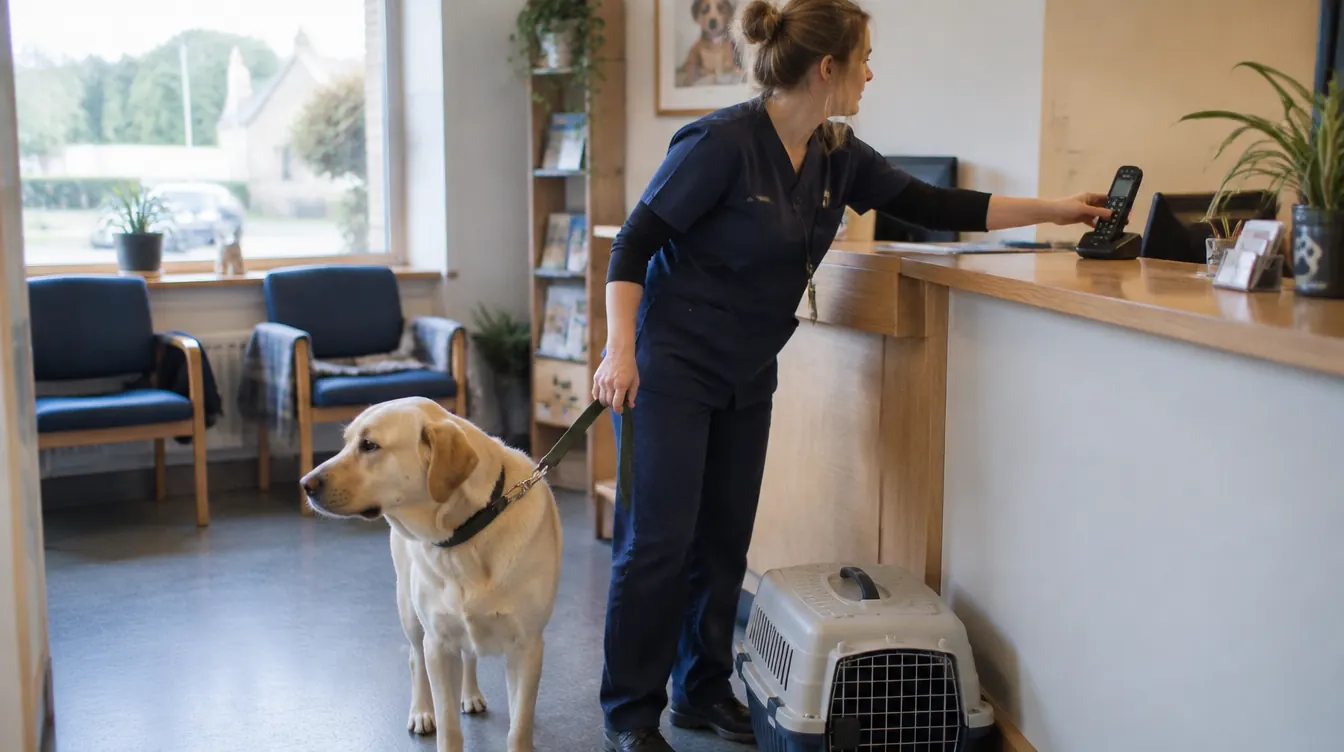
Give emergencies a clear route straight to your clinical team, then sort everything else: book appointments during the call, take repeat prescription requests and results queries as messages, and staff the phone at your busiest times. Daytime overflow answering can catch the calls that still ring out, while your own out-of-hours provider keeps covering emergencies at night.
A guide to telephone skills on vetnurse.co.uk sets a simple standard: answer within three rings and you impress the caller, within five is acceptable in a busy practice, and every ring after that is progressively more annoying. On a Monday morning, with consults overrunning, a nurse in theatre and owners queuing at the desk, five rings can feel out of reach.
Busy lines are not just an irritation for owners. They make it harder for the call that matters, an animal in trouble, to get through. This guide looks at how to sort calls so emergencies reach your team at once, how to take pressure off the desk, and where outside help fits.
Why do vet practice phone lines get so busy?
Because almost everything comes through the same few lines. Vaccination bookings, repeat prescription requests, owners chasing blood results, new clients registering a puppy and worried owners with a poorly pet all ring the same number, often at the same time of day. The front desk is also checking animals in, taking payments and answering questions face to face.
Vet Times describes congested phone lines and long waiting times as symptoms of a practice that is not working as well as it could. That is a useful way to look at it: the phone is where pressure elsewhere in the practice shows up. Our page on call answering for vets covers the typical calls in more depth; here we focus on how to sort them.
What should happen to an emergency call?
It should go straight through to your clinical team, every time. The person answering should not be deciding how serious it is. Your vets set the rule, usually a list of situations that always go through plus a catch-all for any owner who says the call is urgent, and the receptionist follows it.
The RCVS says every veterinary practice in the UK must provide 24-hour emergency first aid and pain relief, either itself or through another provider such as a dedicated out-of-hours service. That duty sits with the practice and its out-of-hours provider. An answering service does not meet it and should never be presented as if it does.
How should you sort the calls that are not emergencies?
Once emergencies have a clear route, the rest of the day's calls can be split by what the caller needs and who has to act. Many do not need a vet or a nurse at the moment of the call at all.
| Type of call | What happens | Who acts |
|---|---|---|
| An animal in distress or an owner who says it is urgent | Put straight through, or flagged as urgent if nobody can take it | Vet or nurse, immediately |
| Consults, vaccinations and nurse appointments | Booked into the diary using your appointment rules | Receptionist, during the call |
| Repeat prescription requests | Taken as a message with the pet's name, the product as the owner describes it and how they will collect | A vet checks and authorises later |
| Results and post-operative updates | Message for the vet or nurse on the case, or a transfer if they are free | Clinical team, when available |
| New client registrations | Details taken and a first visit booked | Receptionist |
| Questions about night and weekend cover | Your out-of-hours arrangement explained in agreed wording | Receptionist |
Nobody on the phone should promise a prescription, interpret a result or say whether a symptom can wait. Those decisions stay with your vets.
How can you get closer to answering within five rings?
Treat it as a set-up job rather than asking the desk to work harder. This order works for most practices:
- Find your peaks. Use your phone system's reports, or simply tally missed calls by hour for a fortnight.
- Write the emergency rule with your vets, so anyone answering knows exactly which calls go straight through.
- Move routine requests to messages. Repeat prescriptions and results calls do not need a live conversation with a clinician.
- Protect the peak. Give one person the phone during your busiest period while a colleague handles the counter.
- Decide what happens to the overflow: a short hold message, a call-back list, or a divert to an outside team after a set number of rings.
These steps follow the same thinking as our older article on the five most important rules of call handling: answer promptly, know where each call goes, and never leave a caller unsure what happens next.
Can an answering service help a vet practice during the day?
Yes, and daytime is where it helps most. With a call handling service set up as overflow, your own team answers first and calls that ring out or find the line engaged divert to receptionists who answer in your practice name. They book consults, take repeat prescription requests as messages and take details from new clients.
Urgent calls are passed straight back to the practice by warm transfer, where the receptionist introduces the caller before connecting them; our guide on whether an answering service can transfer calls explains how that works. If nobody can take the call, it is sent as an urgent message instead. Everything else arrives as a written summary, as described in how you receive messages from an answering service.
What should owners hear when the practice is closed?
They should hear, clearly and first, how to reach your emergency cover. Some practices divert their line straight to the out-of-hours provider at closing time. Others use a recorded greeting that gives the emergency number before offering a voicemail for routine messages, such as a repeat prescription request for the morning.
Either way, voicemail is for routine messages only. It is not emergency cover, and the greeting should say so. Our article on what happens to calls outside office hours sets out the options.
How Onwards Answering can support your practice
Onwards Answering, part of our call handling for healthcare practices, gives you receptionists based in Scotland, working from home, who answer live during business hours. We do not answer live through the night, and we do not replace your out-of-hours provider. An after-hours voicemail is included, but it is not emergency cover, so your night calls should keep going to your own emergency arrangement.
Receptionists never give veterinary advice. Other clinics use the same approach in their own way, as our guide to patient calls for private clinics shows. Try it free for 2 weeks, then pay from £72 per month with no per-call charges and no call caps. See our prices and plans or contact the team.
Frequently asked questions
What is classed as an emergency for a vet?
That is for your vets to define, not the person answering the phone. Most practices give reception a list of situations that always go straight through, plus a rule that any owner who says it is urgent is put through or flagged. Owners who are worried about their pet should contact the practice or its out-of-hours provider.
Is being a vet receptionist a stressful job?
It can be. Receptionists juggle worried owners at the desk, animals in the waiting room and lines that keep ringing, often all at once. Clear rules for emergencies, routine requests taken as messages and overflow help at peak times all reduce the pressure, so the desk can give the owner in front of them proper attention.
Can an answering service make vaccination reminder calls?
Yes, if you agree it. Onwards receptionists can make outbound calls on your behalf, so a list of pets due a booster can be worked through in your practice name, with appointments booked into your diary. Any clinical question an owner raises during the call is passed to your team as a message.